Luowave Showcases Advanced SDR Platforms and 6G Solutions at ICCC 2026
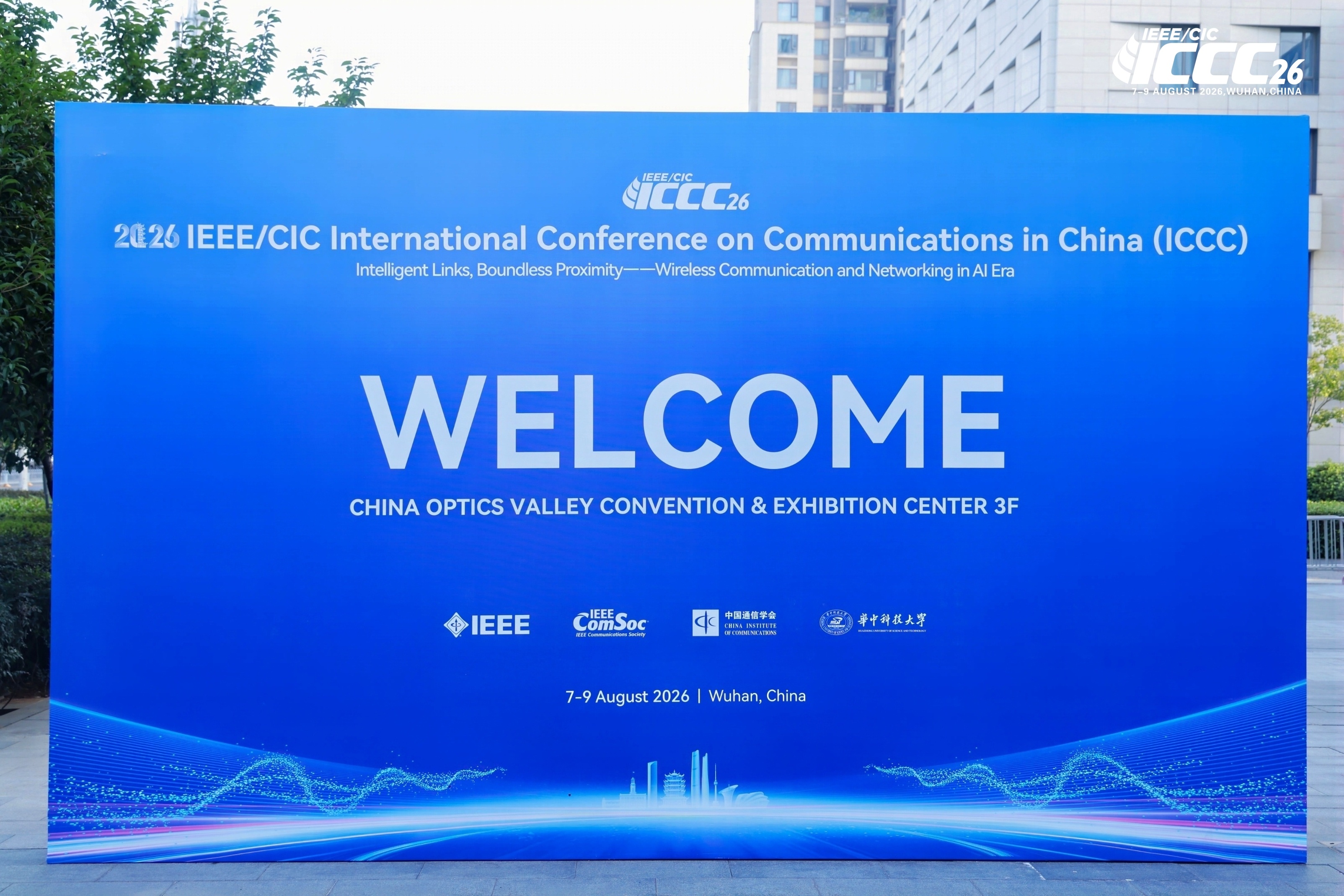
Recently, ICCC 2026 was held at the China Optics Valley Convention & Exhibition Center in Wuhan under the theme “Intelligent Connectivity, Boundless Communication — Wireless Communications and Networks in the Intelligent Era.” The conference brought together experts from universities, research institutes, and industry worldwide to discuss key topics including 5G-Advanced and 6G integrated sensing and communication (ISAC), massive MIMO, next-generation wireless networks, AI-enabled communications, and communication signal processing.
As 6G and ISAC technologies continue to advance, turning simulated algorithms into real-world over-the-air experiments remains a major challenge for researchers. Software-defined radio (SDR) provides the essential hardware foundation for communication algorithm prototyping, array system development, and wireless testing. Its phase-coherent performance and software ecosystem directly affect development efficiency and the reliability of experimental results.
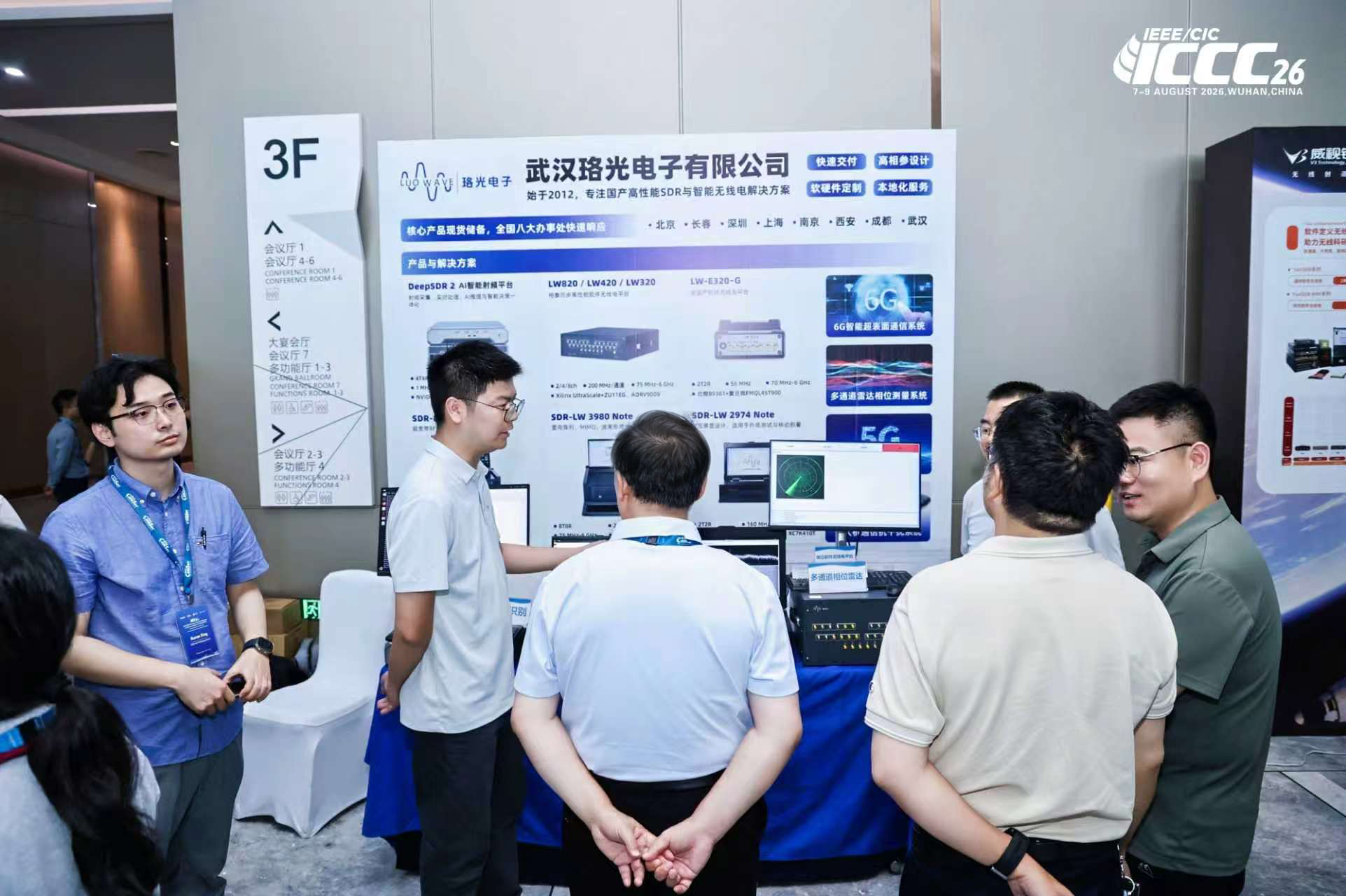
At ICCC 2026, Luowave presented a broad portfolio of self-developed SDR platforms and live demonstration systems, highlighting the capabilities of China-developed SDR solutions in wireless communication prototyping, multi-channel coherent acquisition, and ISAC research.
A Complete SDR Portfolio for Education, Research, and 6G Development
Luowave showcased multiple operational SDR systems, including:
DEEPSDR 2, an AI-powered intelligent RF platform
LW-E320-G, a fully domestically developed software-defined radio platform
SDR-LW 4940 Note, SDR-LW 3980 Note, and SDR-LW 2974 Note, integrated rugged SDR platforms
LW820, LW420, and LW320, high-performance coherent and synchronized SDR platforms
Together, these products address a wide range of requirements, from university teaching and laboratory research to field deployment, airborne and mobile testing, large-scale array development, and AI-based RF analysis.
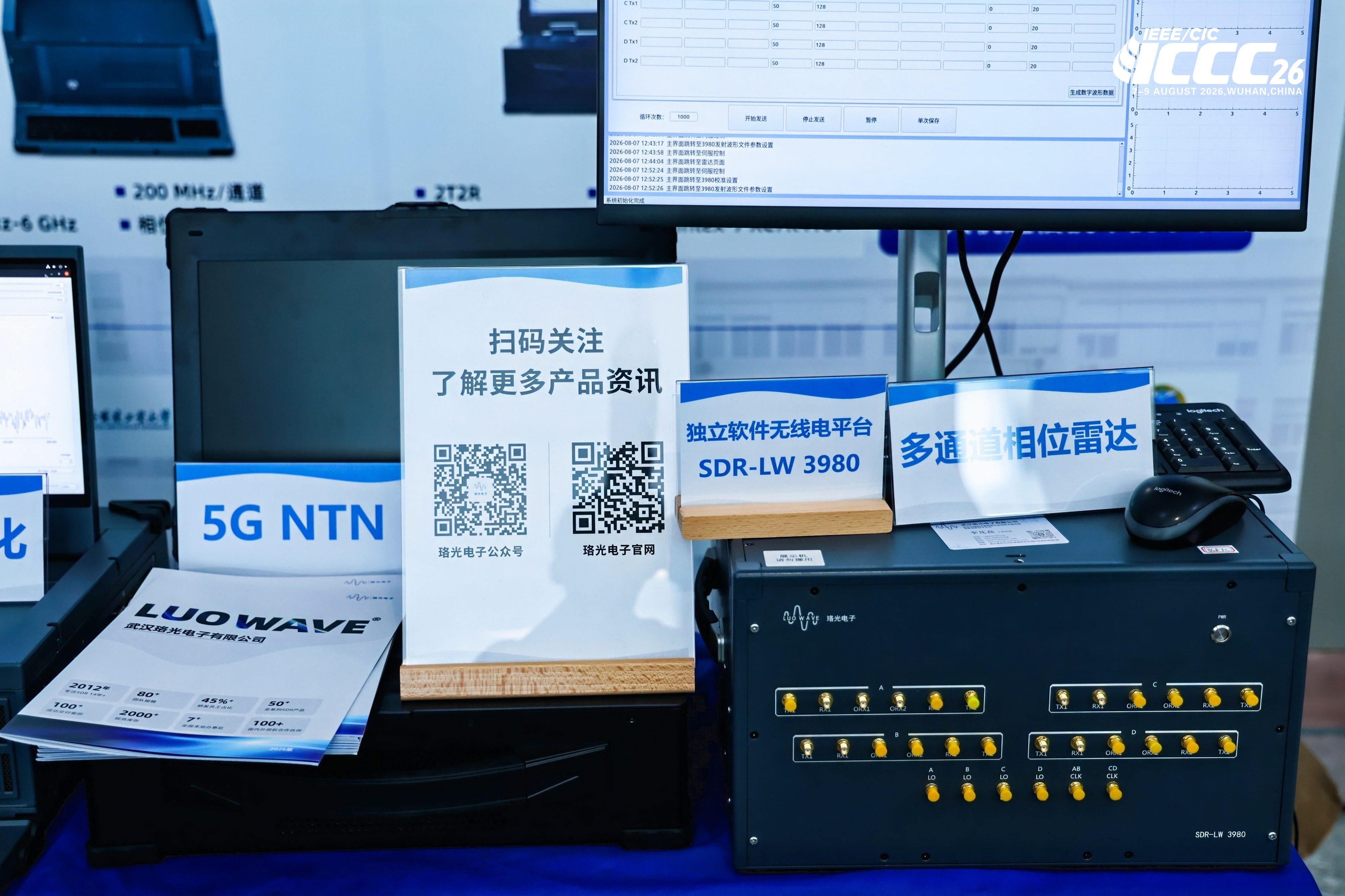
Luowave also demonstrated four complete prototype solutions: AI-based spectrum recognition, integrated sensing and communication, 5G non-terrestrial networks (NTN), and multi-channel phase-coherent radar. These demonstrations presented the full workflow from RF signal acquisition and processing to AI-enabled analysis.
The multi-channel radar demonstration was built on the eight-channel coherent SDR-LW 3980 platform. Field testing showed multi-channel phase drift of less than 1°, meeting the demanding synchronization requirements of phased-array radar development.
The 6G ISAC demonstration used the SDR-LW 4940 Note platform and an integrated communication-and-sensing waveform. It enabled high-speed data transmission alongside target detection, ranging, and velocity measurement, making it well suited to advanced 6G prototype research.
Live Demonstrations That Accelerate 6G Research
The four demonstration systems showed how Luowave SDR platforms can support practical development in several leading research areas, including ISAC algorithm validation, non-terrestrial network link testing, radar signal analysis, and AI-enabled spectrum sensing.
To accommodate different project requirements, Luowave also provides supporting engineering services such as custom FPGA firmware development, clock synchronization solution adaptation, and customized hardware configurations. These capabilities help research teams overcome hardware development barriers and convert theoretical algorithms into testable, repeatable prototypes more efficiently.
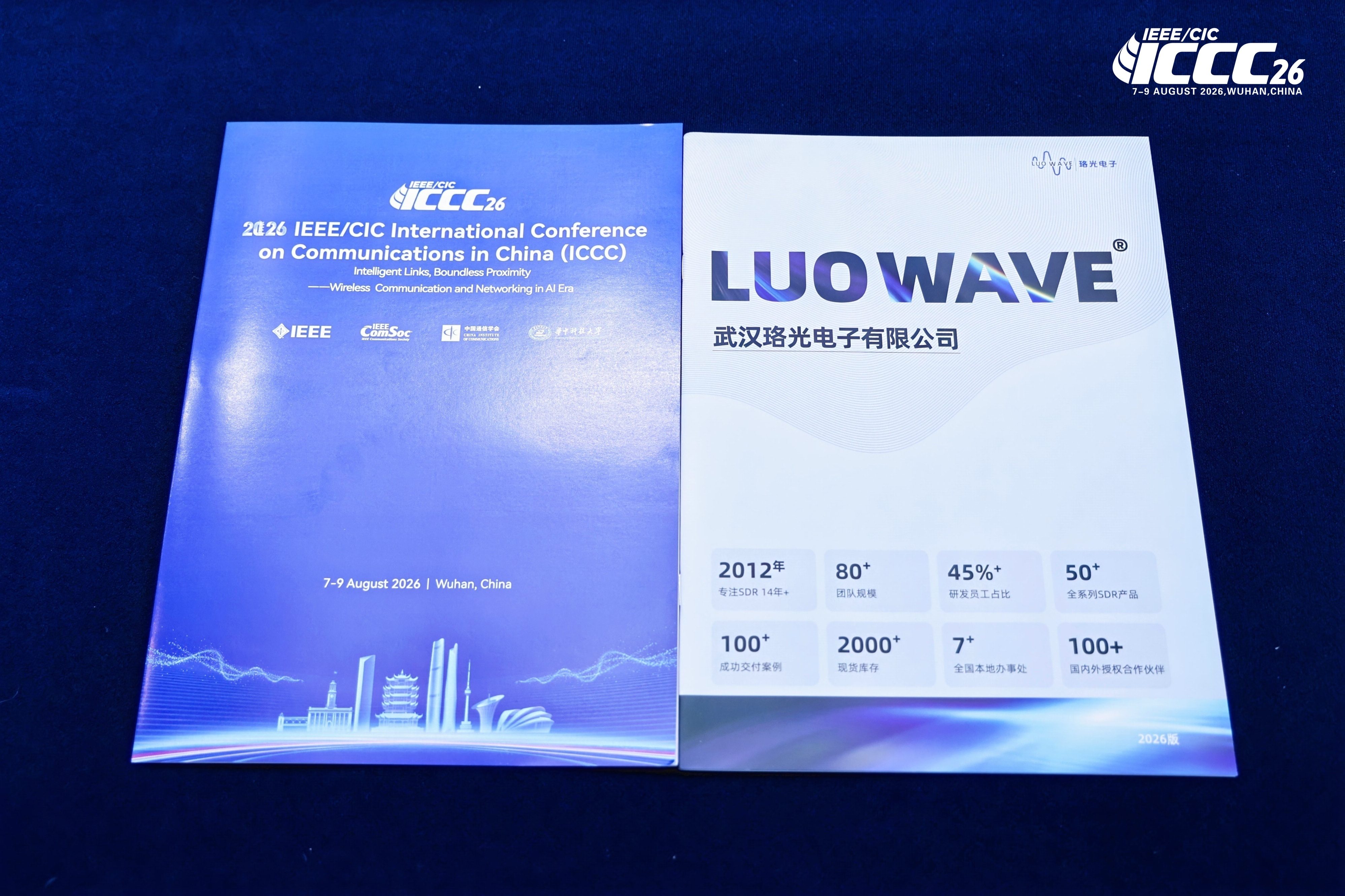
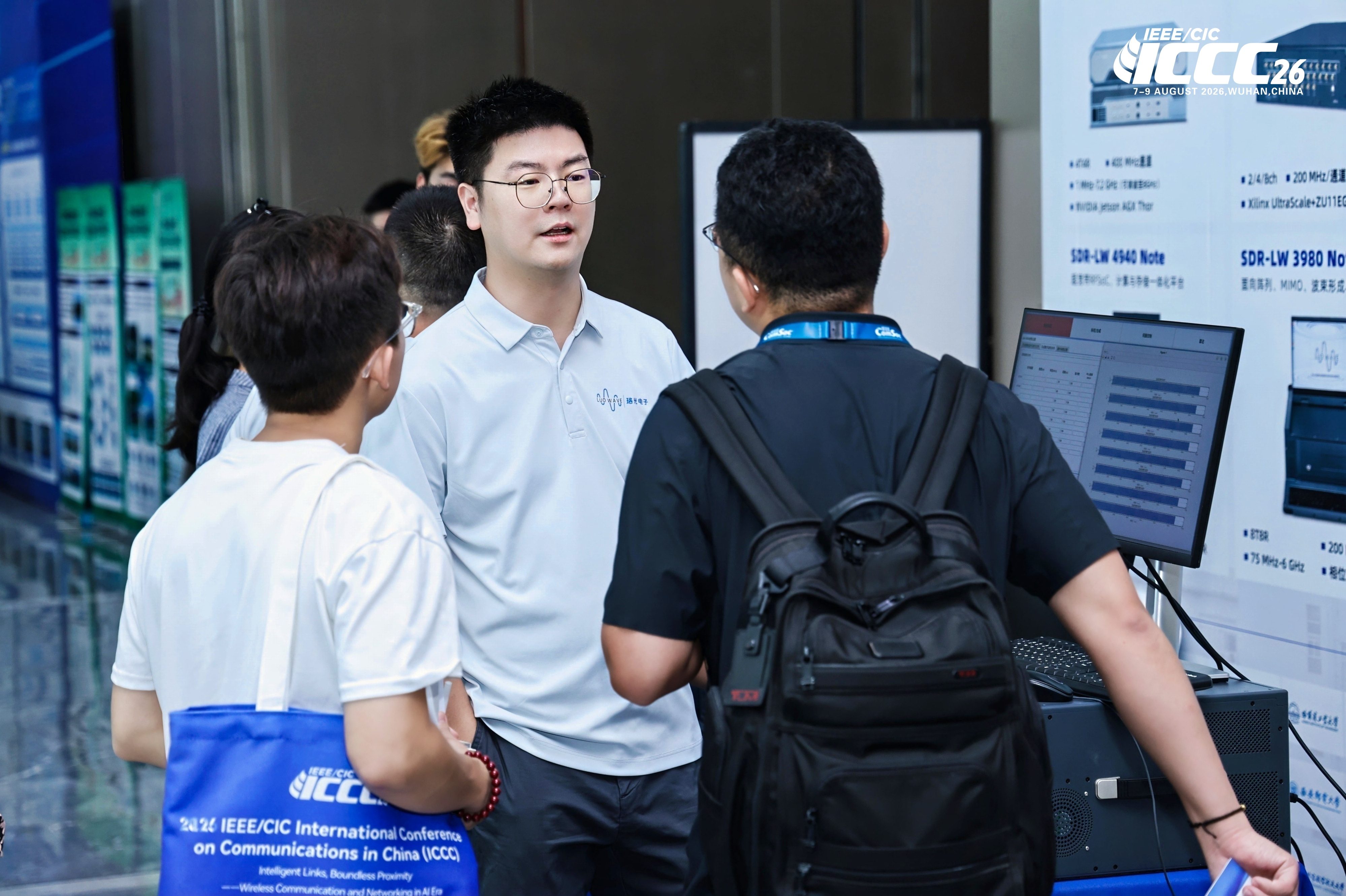
During the conference, university researchers, students, and industry experts visited the Luowave booth and discussed multi-channel coherence, array system architecture, secondary SDR development, and ISAC prototype implementation. Drawing on experience from real-world research projects, the Luowave technical team provided practical recommendations on hardware selection and system configuration while gathering first-hand feedback from researchers.
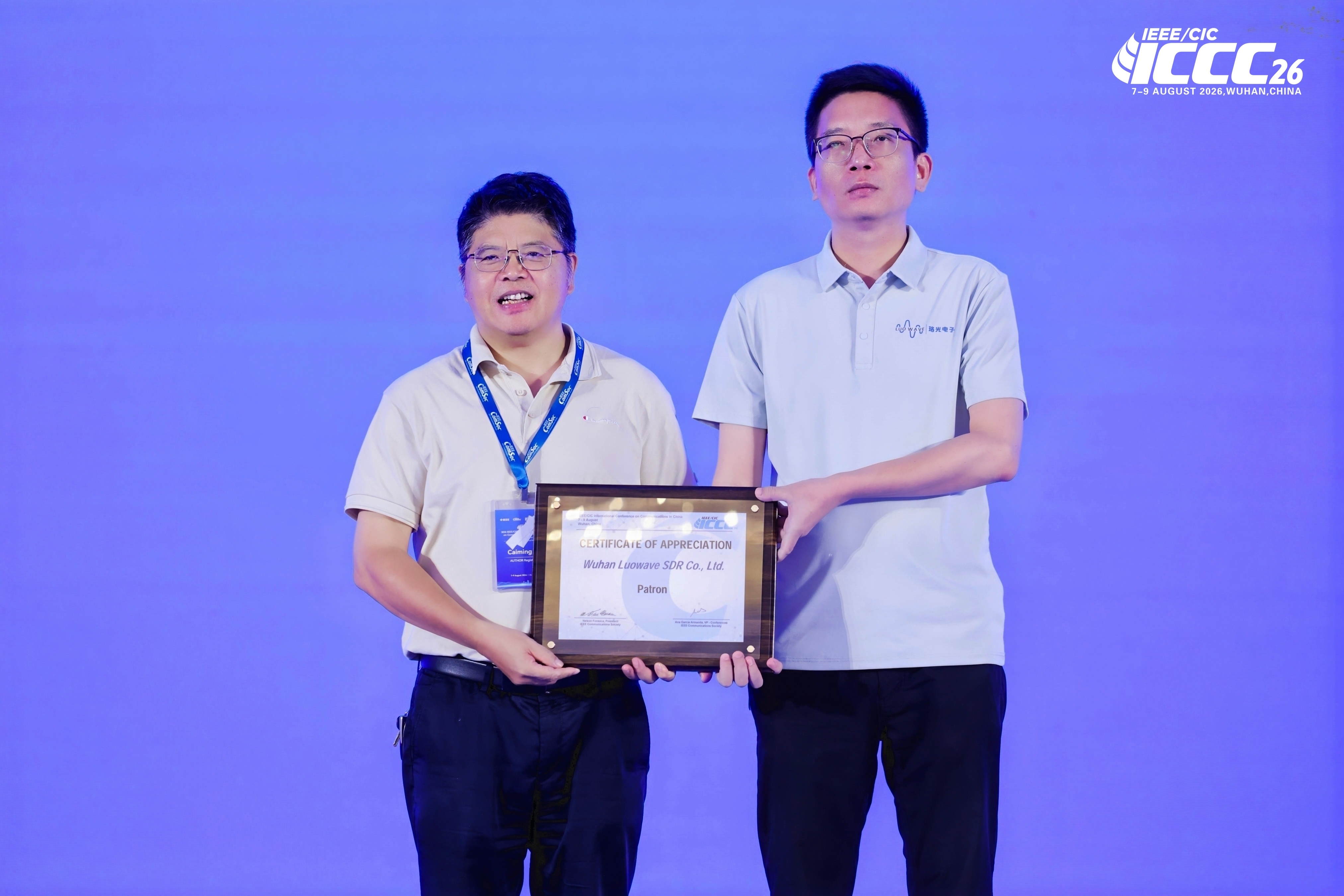
As a Patron Sponsor of ICCC 2026, Luowave received a certificate of appreciation from the organizing committee in recognition of its support for academic and industrial collaboration in wireless communications.
From Communication Theory to Over-the-Air Validation
Innovation in next-generation wireless communications requires reliable, high-performance, and locally developed RF hardware. Luowave continues to advance its SDR hardware platforms, FPGA firmware, and upper-layer software toolchains, creating a more complete development path from algorithm simulation to over-the-air testing.
Looking ahead, Luowave will continue to focus on 6G, integrated sensing and communication, and intelligent electromagnetic spectrum sensing. By continuously improving its products and solutions, the company aims to provide researchers and engineers with flexible and dependable SDR tools that turn innovative communication concepts into working hardware prototypes.