Beyond Specifications | LUOWAVE Shines at APEMC 2026: High-Performance SDR Tackles Complex Electromagnetic Challenge

Today, the Asia-Pacific International Symposium on Electromagnetic Compatibility (APEMC 2026) concluded successfully amidst a vibrant academic atmosphere. As a premier event in the Asia-Pacific region, the symposium drew extensive participation from global universities, research institutions, and industry experts.
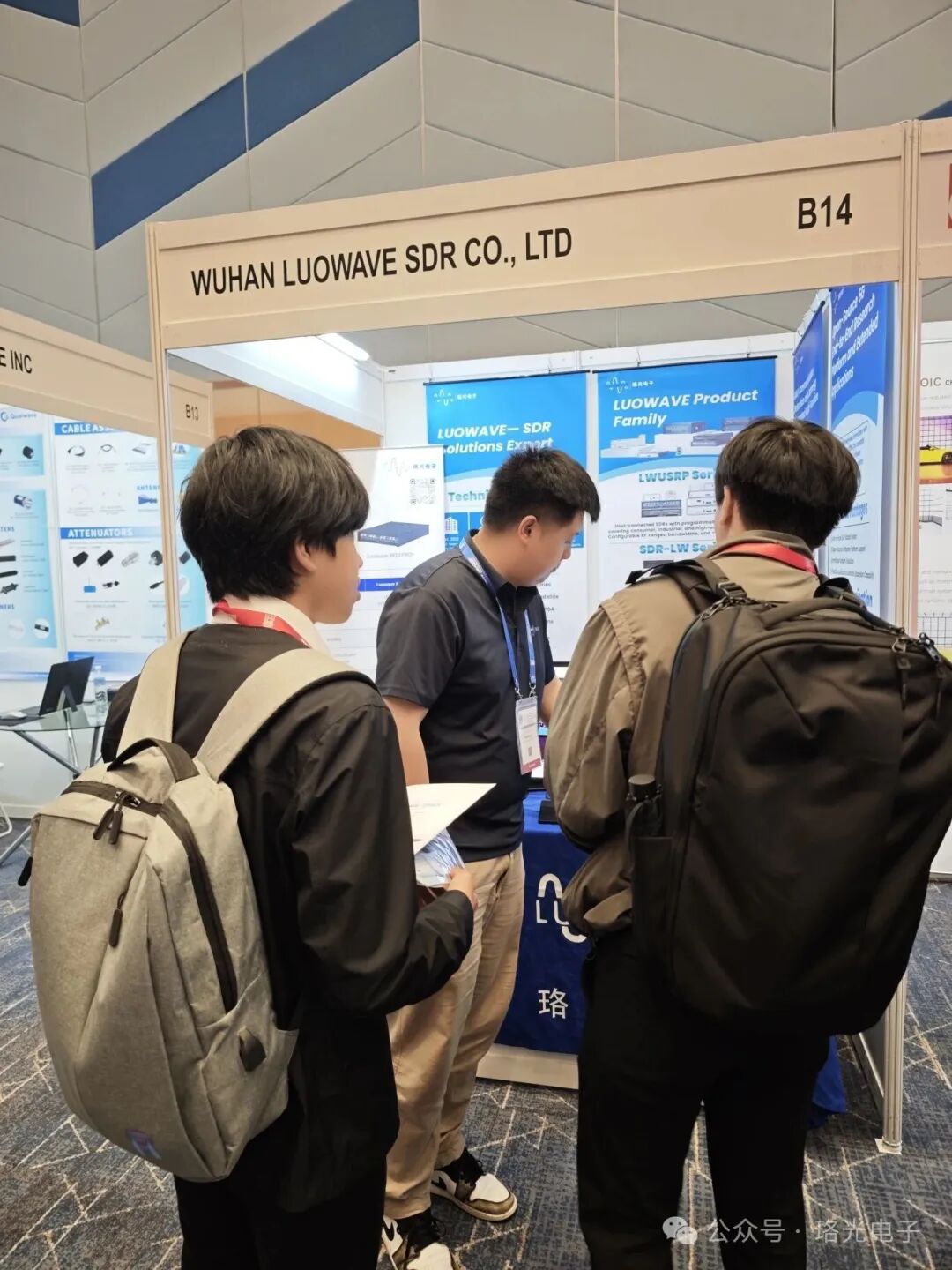
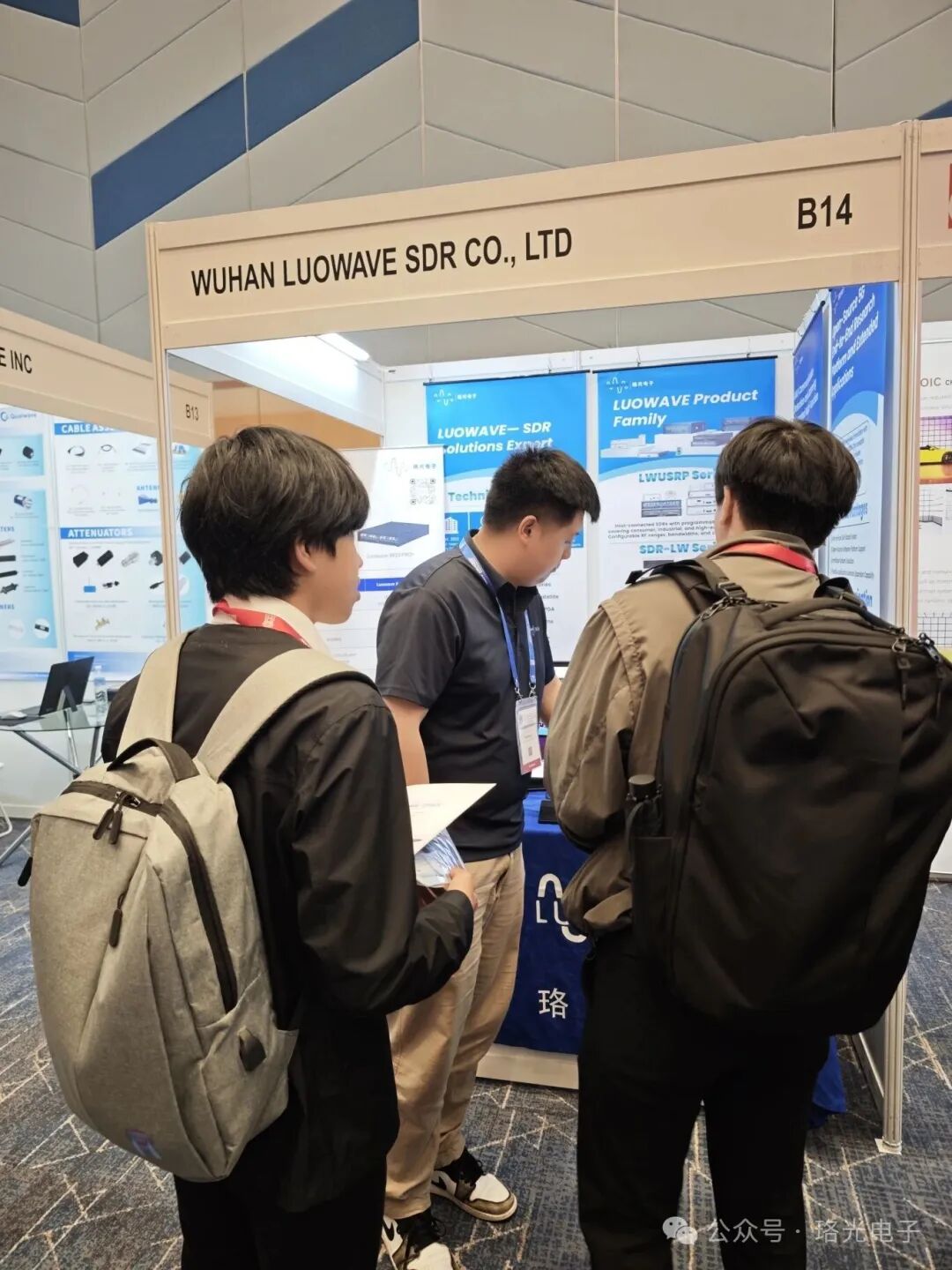
Wuhan LUOWAVE showcased its diverse lineup of Software Defined Radio (SDR) platforms, highlighting their pivotal value in complex electromagnetic spectrum sensing, interference analysis, and situational simulation. During the exhibition, professors from the University of Tunku Abdul Rahman (UTAR) and the Universiti Malaysia Perlis (UniMAP) expressed keen interest in LUOWAVE’s high-performance SDR solutions, engaging in in-depth discussions regarding 5G/6G communication research.
Full-Stack SDR: Covering All EMC Testing Scenarios
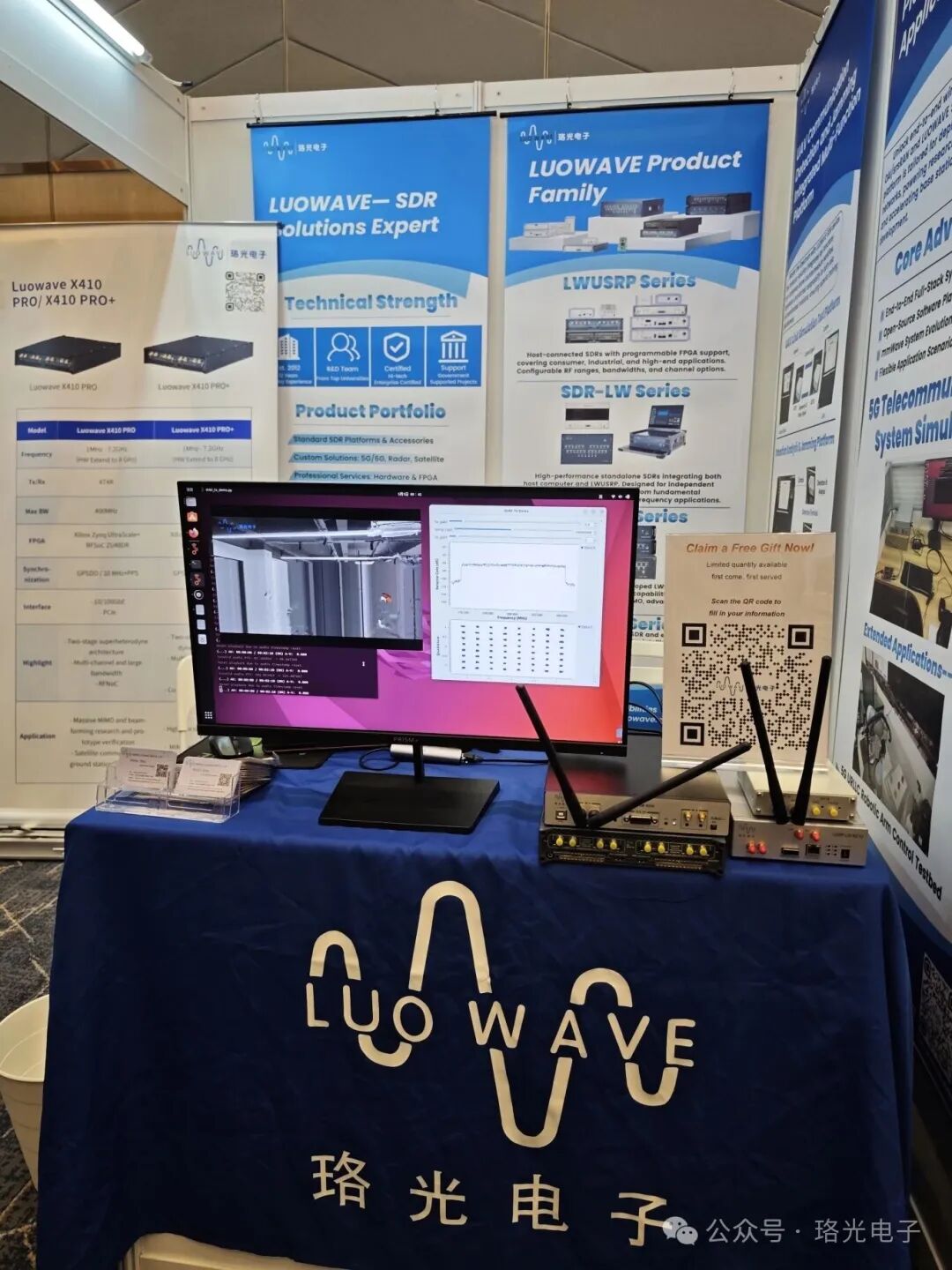
At this exhibition, LUOWAVE highlighted four flagship platforms—LW-B210, N210, X310, and X410 Pro+—providing a comprehensive suite of solutions ranging from portable field pre-testing to high-end laboratory validation. Leveraging their high flexibility, programmability, and reproducibility, these platforms are precision-engineered to meet core EMC requirements, such as wideband signal acquisition and multi-channel synchronized measurement.
Typical Application Cases: Wireless Testing & Electromagnetic Validation
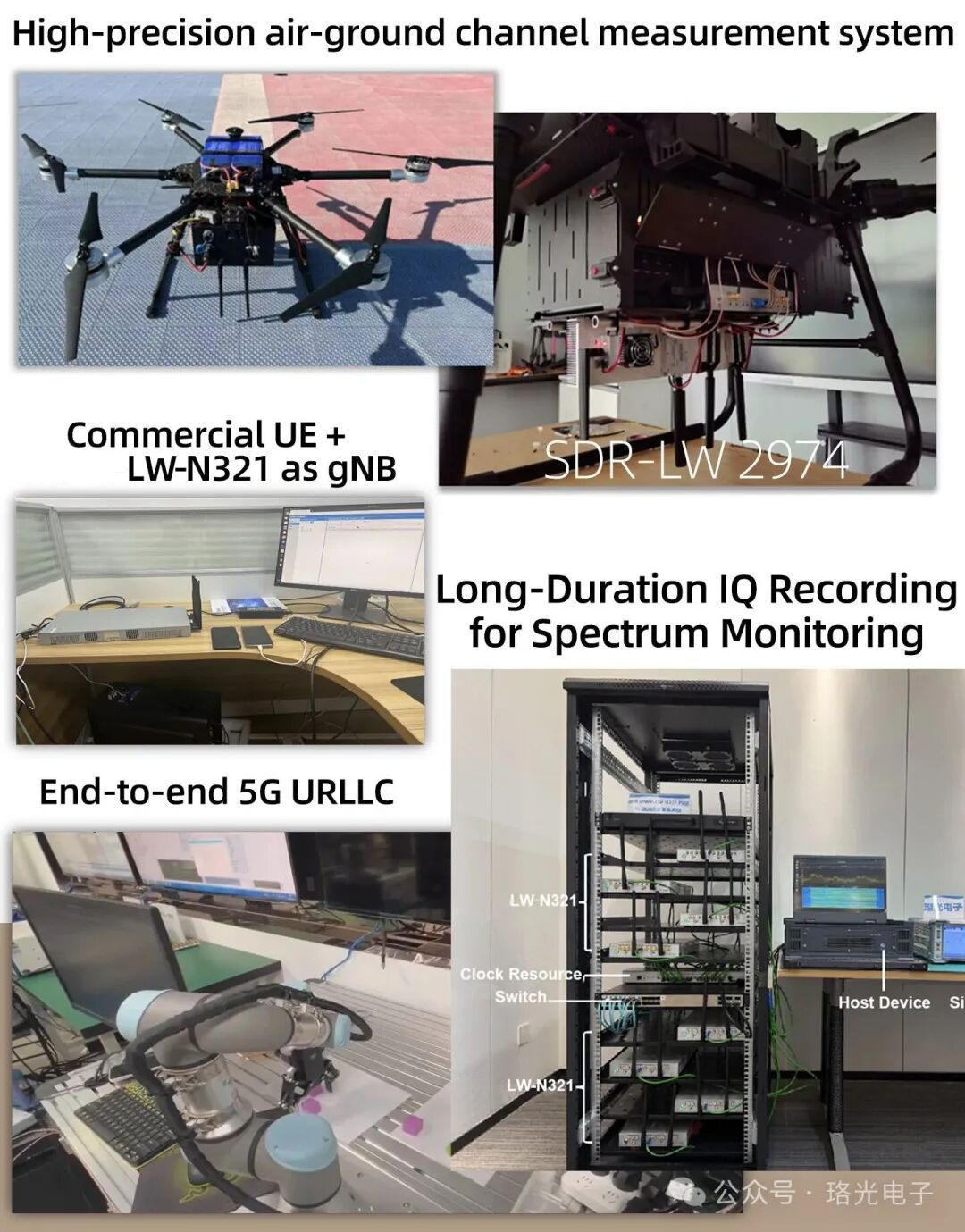
1. Wideband Spectrum Monitoring & Long-term IQ Data Acquisition
By leveraging the high-performance front-end and multi-device synchronization architecture of the LW-N321, we solve the challenges of "blind spots" and "storage bottlenecks" in complex electromagnetic environments.
Core Functions: Gapless recording of continuous IQ data streams, real-time full-band spectrum capture, and interference signal playback.
Application Scenarios: Electromagnetic environment mapping, precise interference source tracing, and long-term statistical analysis in EMC trials.
2. Multi-channel Coherent Acquisition (DOA/MIMO/Array Direction Finding)
Utilizing the LW-X310 with TwinRX-LW daughterboards or the LW39x0 series multi-channel platforms to build highly consistent coherent reception systems.
Core Functions: Achieving precise spatial signal perception through rigorous inter-channel phase synchronization technology.
Application Scenarios: Array antenna EMC testing, spatial spectrum direction finding, and coupling interference analysis between complex multi-port systems.
3. Air-to-Ground Channel Measurement & Airborne EM Data Collection
Constructing dynamic-static hybrid test links using the SDR-LW 2974 (airborne side) and LW-X310 (ground side).
Core Functions: Channel characteristic modeling and dynamic interference data acquisition in complex field environments.
Application Scenarios: Supporting EMI/EMS validation for airborne electronic equipment and evaluating the anti-interference robustness of air-to-ground links.
4. 5G End-to-End EMC & Low-Latency Performance Validation
Building standard-compliant 5G physical layer and over-the-air (OTA) simulation platforms based on the LW-B210/N310/N321 series.
Core Functions: Simulating real 5G protocol stacks to conduct radiated interference and coexistence stress testing.
Application Scenarios: EMC performance loss assessment for URLLC (Ultra-Reliable Low-Latency Communications) scenarios.
5. mmWave Communication & RIS (Smart Surface) EMC
Extending the test frequency range to 24–44 GHz using the SDR-LW 4940 Note combined with the MMW-44 millimeter-wave extension module.
Core Functions: Constructing ultra-wideband mmWave links to verify the signal control capabilities of RIS (Reconfigurable Intelligent Surfaces).
Application Scenarios: High-frequency propagation loss analysis, reflection interference suppression, and mmWave coverage enhancement validation.
6. UAV Countermeasures & EM Protection Testing
Providing a closed-loop test environment that integrates link validation, signal detection, and interference simulation.
Core Functions: Simulating complex electronic warfare environments and conducting attack simulations on navigation (GNSS) and communication links.
Application Scenarios: EMI tolerance assessment for UAV systems, anti-jamming algorithm verification, and electromagnetic protection effectiveness evaluation.
Keynote Speech: "Beyond Specifications" – Defining a New Paradigm for Testing
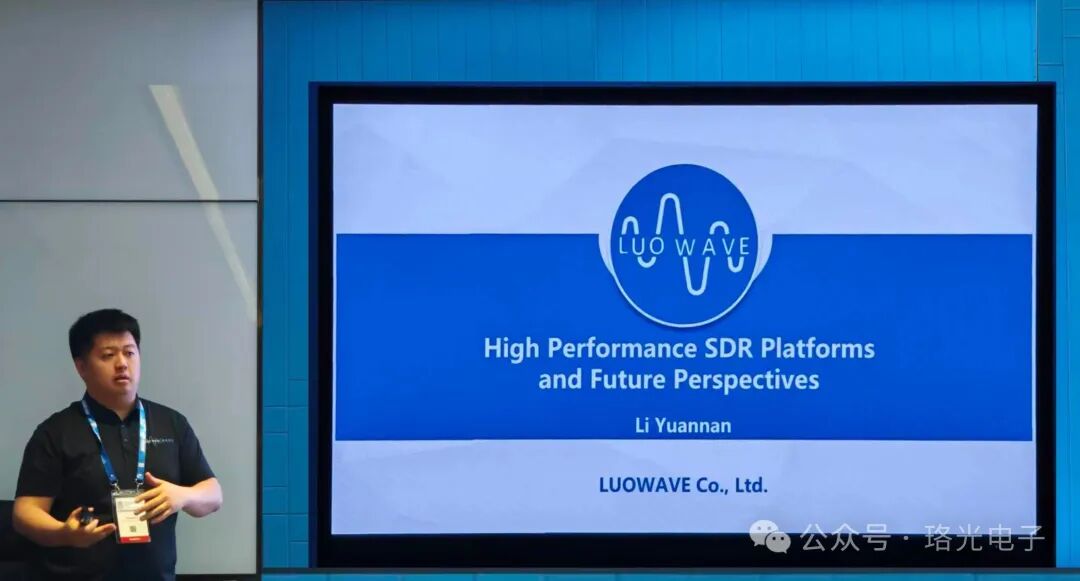
During the symposium, Li Yuannan, Product Manager at LUOWAVE , delivered a keynote speech titled "High-Performance SDR Platforms and Future Perspectives." He introduced the core concept of "Beyond Specifications," arguing that the value of an SDR should not be measured solely by data sheets—such as frequency range, bandwidth, or channel count. Instead, more emphasis should be placed on its programmability in complex engineering, toolchain integrity, and real-world problem-solving capabilities.
In his report, Li noted: "With the advancement of Integrated Sensing and Communication (ISAC), the electromagnetic environment is becoming increasingly complex. By leveraging AI-powered intelligent signal analysis and wideband real-time processing, LUOWAVE is evolving the SDR from a general-purpose research tool into an adaptive electromagnetic situational awareness platform. Moving forward, we will continue to build a complete ecosystem that integrates hardware, toolchains, and industry-specific use cases."
Summary & Outlook: Empowering Research, Creating the Future Together
From precision laboratory validation to complex field testing, LUOWAVE is providing systematic, reproducible, and programmable solutions for EMC testing through high-performance SDR technology. On the journey toward 6G and intelligent electromagnetic sensing, LUOWAVE remains committed to collaborating with industry experts. By empowering researchers and industrial users with an open ecosystem, we continue to explore the infinite possibilities of radio technology.