Research Frontier | Luowave SDR assists Southeast University team in adaptive switching wave-transparent / stealth cloak research.
Traditional stealth technologies often face an "electromagnetic island" dilemma where "stealth" and "communication" are mutually exclusive—to achieve electromagnetic shielding, protected targets are typically unable to communicate with the outside world in real-time.Recently, a team led by Academician Cui Tiejun and Professor Ma Huifeng from Southeast University published research in Laser & Photonics Reviews. They developed a Self-Adaptive Switching Transparent/Invisible (SASTI) cloak based on an omnispace programmable metasurface, successfully enabling automatic switching between protection and communication modes based on the external environment.
In the experimental verification phase of this study, the Luowave Electronics LW-X310 SDR platform, with its high programmability and excellent RF performance, undertook core tasks including complex signal modulation, real-time link verification, and wideband dynamic testing, providing stable and reliable hardware support for the realization of this frontier concept.
Innovative Architecture: Dual-Mode Adaptive Regulation and Full-Space Coverage
The core breakthrough of the SASTI cloak lies in its "autonomous perception" and "dynamic response" to the electromagnetic environment. By integrating PIN diodes and varactor diodes into the metasurface units, the research team achieved independent real-time regulation of electromagnetic wave transmission and reflection characteristics:
Transparency Mode: The cloak maintains high transparency to electromagnetic waves. The internal target can transmit modulated signals directly via internal antennas, or use the programmable metasurface as a spatial modulator with internal antennas providing the carrier wave to achieve high-fidelity signal transmission.
Invisibility Mode: Integrated sensing antennas monitor external threat detection waves in real time. Once the threshold is triggered (set at a threshold voltage of 1.5V), the system automatically switches modes. By adjusting the metasurface reflection phase compensation, the scattering characteristics match the background environment to achieve electromagnetic invisibility or electromagnetic illusion, while shielding internal digital signals to prevent eavesdropping.
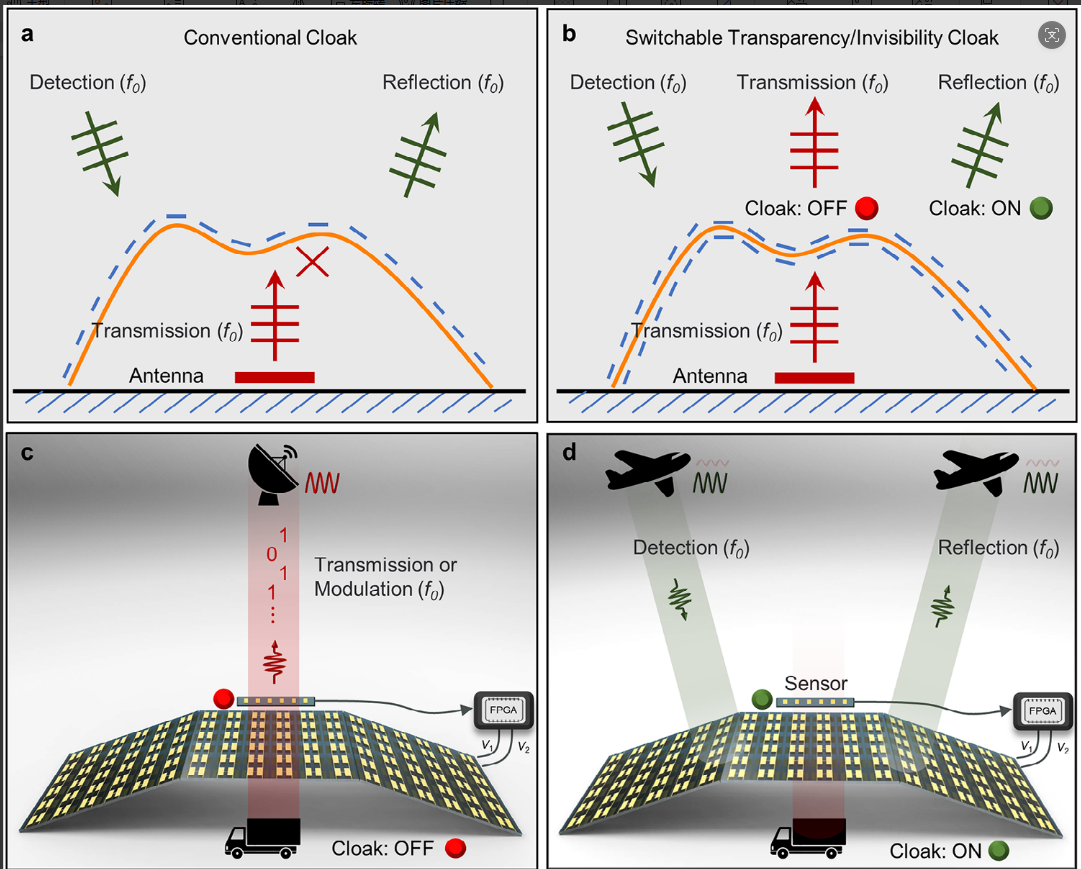
Figure 1: Schematic diagram of the SASTI cloak based on metasurfaces
a) Targets inside traditional cloaks cannot radiate electromagnetic waves to the outside in real time within the stealth frequency band; b) The SASTI cloak does not affect the radiation function of the internal target even within the stealth frequency band; c) In transparency mode, electromagnetic waves can freely penetrate the cloak, enabling real-time communication between the internal target and external collaborative devices; d) In invisibility mode, the cloak achieves electromagnetic stealth by adjusting scattering characteristics to match the background environment, while shielding internal signals to prevent eavesdropping.
Key Verification: LW-X310 Builds End-to-End Test Link
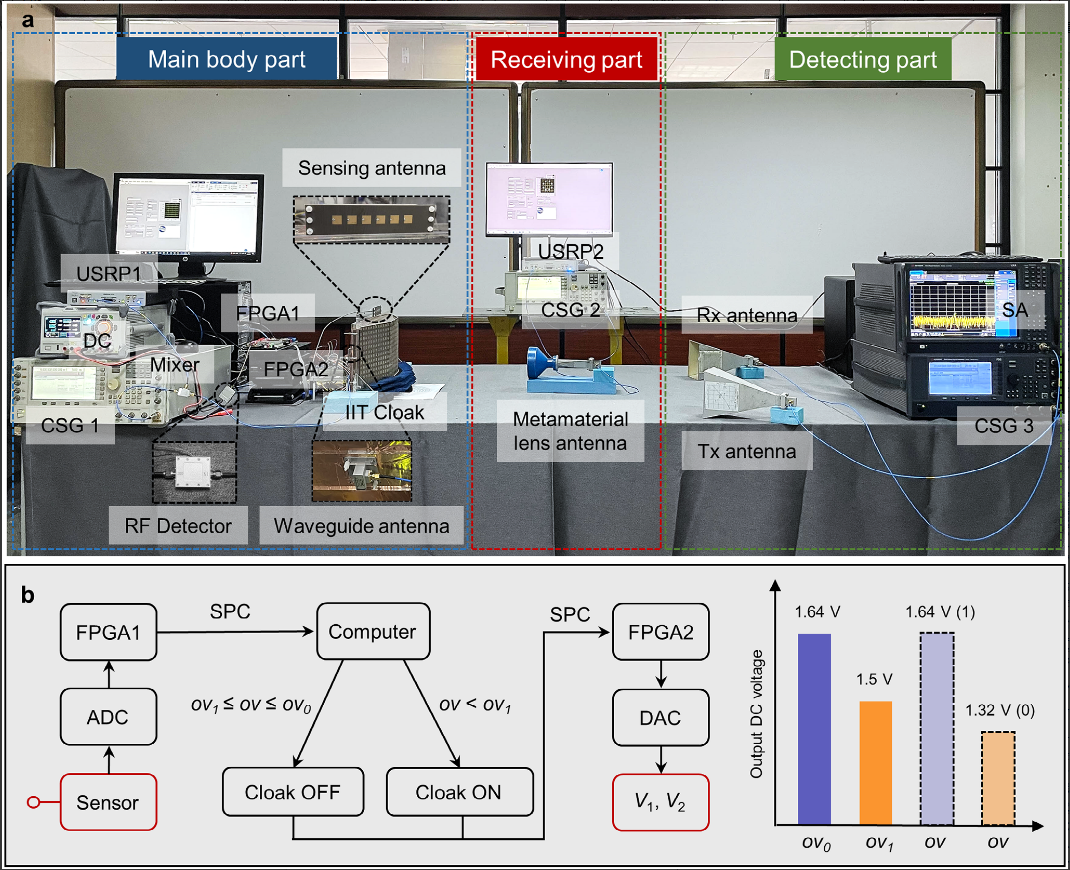
In the system functional verification, two LW-X310 units established a complete end-to-end test link (as shown in Figure 2), completing a comprehensive assessment of the cloak's functions through two core technical verifications:
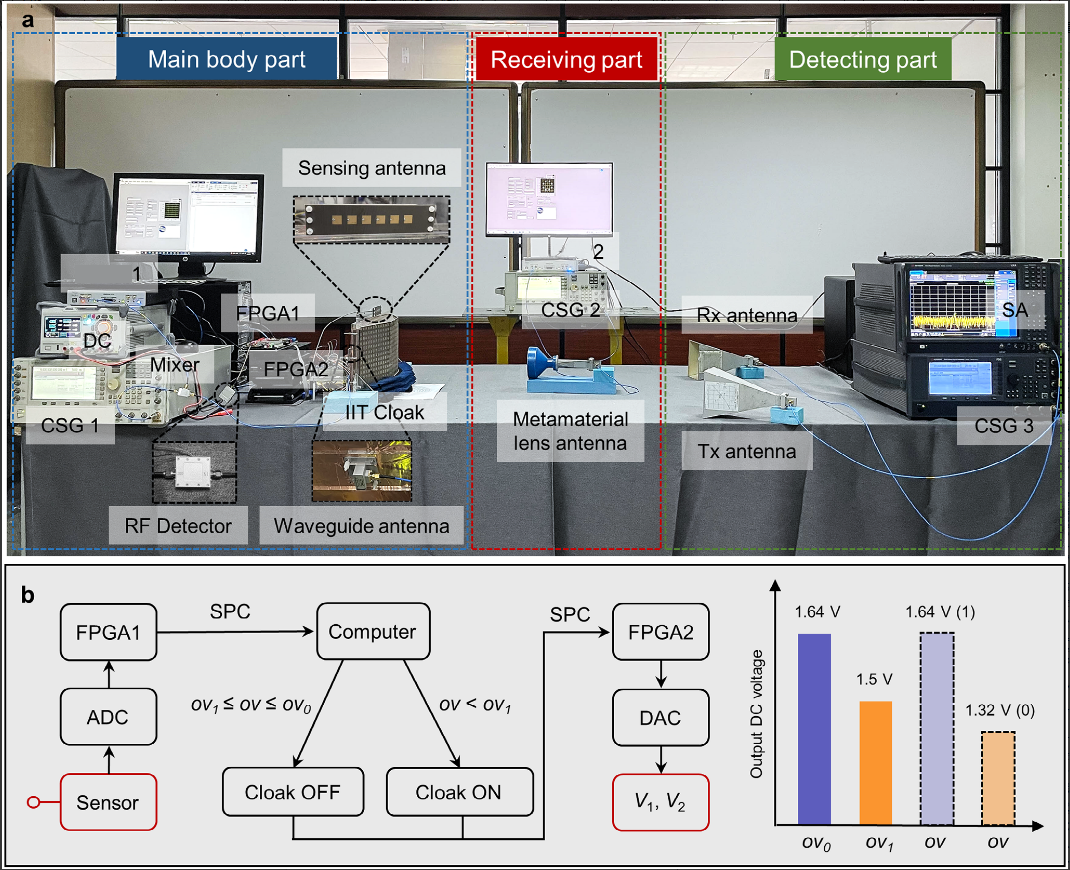
Figure 2: Implementation scheme of the SASTI cloak system based on metasurfaces
a) Experimental setup of the self-adaptive system; b) Schematic diagram of the sensor principle and measured output voltage.
Technical Verification 1: High-Fidelity Physical Layer Transmission of Complex Communication Protocols
To verify the communication capability in transparency mode, SDR Platform 1 and a signal generator synthesized a 10GHz X-band carrier through mixing to load modulated signals as the transmitter; SDR Platform 2 served as the receiver to complete demodulation and restoration. The experiment successfully demonstrated two schemes:
8PSK Image Transmission: SDR Platform 1 modulated the State Key Laboratory of Millimeter Waves logo signal. Under the cloak's coverage, the receiver could still restore clear constellation diagrams and distortion-free images.
2ASK Spatial Modulation: Using the metasurface as a modulator and the internal antenna as a carrier source, the Southeast University badge image was successfully transmitted.
Both verifications proved that the metasurface has extremely low insertion loss and phase distortion for electromagnetic waves in transparency mode, ensuring real-time communication quality for internal devices.
Refer to Figure 3-a (Image transmission results and constellation performance under 8PSK modulation) and Figure 3-e (Image transmission results and constellation performance under 2ASK modulation).
Technical Verification 2: Scattering Reconstruction and Anti-Eavesdropping in Invisibility Mode
To verify the protection effect of the invisibility mode, when the sensing antenna detects a 20dBm threat detection wave, the system output voltage falls below the 1.5V threshold, automatically switching to invisibility mode. At this point, the communication signal received by USRP2 is immediately interrupted, the constellation diagram turns into random noise, and the image cannot be restored, effectively preventing information leakage. Simultaneously, measurements via SDR Platform and spectrum analyzers showed that the 10GHz spectral power of non-cooperative antennas was as low as -67.86dB/-65.57dB in transparency mode, whereas in invisibility mode, this power increased to -34.84dB. The target's scattering characteristics precisely match the background environment, achieving both electromagnetic stealth and demonstrating information security protection value.
Refer to Figure 3-c, g (Constellation changes showing communication interruption after invisibility mode is activated) and Figure 3-b, d, f, h (Comparison of scattering power spectra in different modes).
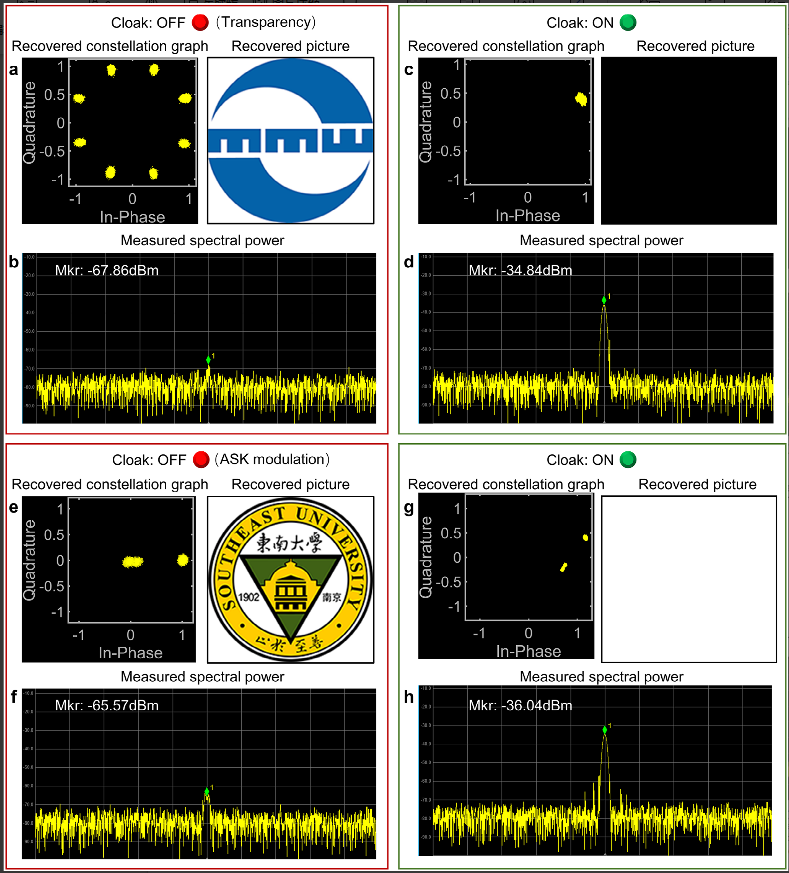
Figure 3: Experimental results of the SASTI cloak system
Performance Quantification: Luowave SDR Precisely Captures Amplitude-Phase Characteristics and Power Differences
The excellent technical specifications of the LW-X310 provided precise data support for metasurface performance analysis:
Wideband Amplitude-Phase Response Capture: Relying on the high bandwidth and high dynamic range of the X310, amplitude and phase variations of the metasurface under different bias voltages were precisely captured within the 8-12 GHz range. In reflection mode, phase coverage exceeded 270°, and in transmission mode, the amplitude could be continuously regulated between 0.2 and 0.85, providing key experimental evidence for optimized metasurface design.
Quantitative Measurement of Scattering Power: The X310, in coordination with spectrum analyzers, quantified signal power differences across different operating modes. This provided objective quantitative data support for the scattering field reconstruction effect of the cloak, ensuring the reliability and repeatability of experimental results.
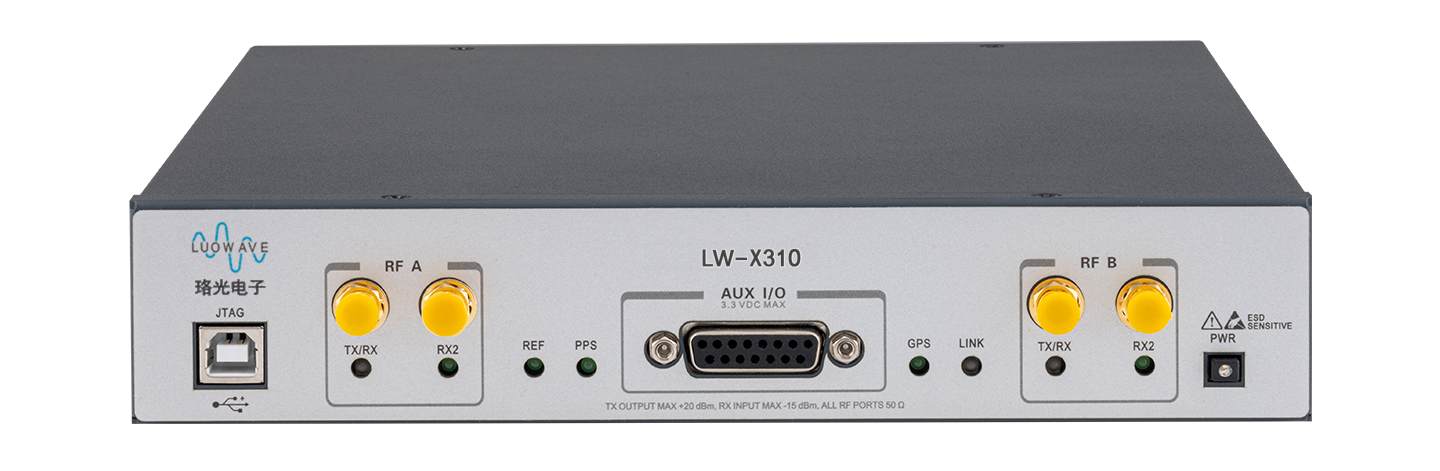
Figure 4: Luowave LW-X310
Conclusion: The Engineering Value of Luowave SDR
In this Southeast University study, the LW-X310 served not only as high-performance signal transmission and reception equipment but also as the key cornerstone for building a programmable electromagnetic environment verification platform. With its wideband coverage, flexible modulation capabilities, and precise signal capture characteristics, it fully supported the core requirements of the SASTI cloak—including dual-mode switching, multi-protocol communication, and wideband performance optimization—transforming complex microwave experiments into a flexibly configurable software-defined process.
This application fully demonstrates the engineering value of SDR equipment in frontier research such as advanced electromagnetic control and information security. Furthermore, it provides a standardized and reusable testing solution for the future development of intelligent electromagnetic surfaces, secure communications, and novel radar protection technologies.