Breaking the General Bottleneck: LUOWAVE Releases Luowave Driver V2 Customized Driver Solution
In the field of wireless communication and RF system development, the true bottleneck of R&D efficiency is not merely whether an algorithm is theoretically viable, but rather whether the software capabilities can truly achieve seamless synergy with the hardware platform.
For the LW39x0 series hardware platforms, performance verification and application exploration typically involve several critical stages, including waveform generation, continuous transmission and reception, raw data analysis, and playback validation. To fully unlock the value of the LW39x0 series, Luowave has officially launched Luowave Driver V2. This driver is compatible with mainstream SDR development platforms such as MATLAB and GNU Radio, providing comprehensive software support for performance validation and application exploration.
Customized Driver: Building a More Comprehensive Verification Support
The value of the LW39x0 series is not only reflected in individual hardware modules but also in the platform-level capabilities formed around high-speed data paths, FPGA programmable logic, driver adaptation, and wideband RF links.
The Luowave Driver V2 further completes the software verification interface. Combined with the product's custom PCIe IP cores and efficient driver adaptation, it ensures that the LW39x0 series hardware platform is not just "capable" but also easier to "utilize, verify, and rapidly iterate."
In conjunction with the product itself, the LW39x0 series demonstrates the following characteristics:
Custom PCIe IP Core Capability designed for high-speed data links.
Custom FPGA Development Capability tailored for scenario-specific requirements.
Multi-platform Driver Adaptation for various development environments (e.g., MATLAB/GNU Radio).
Wideband Transceiver Capability built upon high-performance RF components.
Deep Connectivity: Bringing Algorithmic Tools into the Real Hardware Link
Many R&D teams face the common pain points of "being able to generate waveforms but struggling to establish the link," or "being able to see the data but finding it difficult to pinpoint issues."
This solution extends the development environment from a mere "upper-layer algorithmic tool" into a direct hardware verification portal.
With the support of Luowave Driver V2, developers can participate directly in the following critical processes:
Signal Construction and Actual Transmission Control
Received Data Acquisition and Raw Data Preservation
Offline Source Data Inspection and File Playback/Reconstruction
Link Status Diagnostics
This means that R&D personnel can complete the entire cycle—from signal generation to link verification—within a more unified workflow, significantly reducing efficiency losses caused by tool switching and link fragmentation.
Breaking the "Black Box" Limitation: Deep Comparison between Luowave Driver V2 and Generic UHD
According to engineering measurement comparisons, Luowave Driver V2 demonstrates significant advantages in low-level development freedom and data stream transparency.
In the competition with traditional Generic UHD, it achieves precise support for complex scientific research scenarios through deep customization in the following four dimensions:
1. Autonomous Control: From "Restricted" to "Full Control"
Generic UHD: High degree of driver encapsulation; although APIs are open, the underlying logic is constrained by third-party frameworks.
Luowave Driver V2: Independently developed, with 100% autonomous control over source code and link logic.
Core Advantage: Clear API logic, no black-box operations, supports higher-dimension deep secondary development.
2. Waveform Generation: From "Multi-layer Encapsulation" to "Direct-to-Hardware"
Generic UHD: Biased toward official objects and support package paradigms; limited customization depth.
Luowave Driver V2: Extremely high degree of freedom, supporting functions such as custom waveforms and custom frame structures.
Core Advantage: Signals are loaded directly without redundant intermediate protocol encapsulation; validation efficiency is greatly improved.
3. Data Transparency: From "Link Obscurity" to "What You See Is What You Get"
Generic UHD: Underlying data stream details are vague, obscured by multiple layers of driver protocols.
Luowave Driver V2: The link is completely transparent. Raw IQ data is directly read and loaded.
Core Advantage: Facilitates research-grade precision analysis, ensuring the accuracy and traceability of every bit of data.
4. Deep Debugging: From "Basic Feedback" to "Millisecond Diagnostics"
Generic UHD: Provides only basic status feedback; extremely difficult to locate faults in complex links.
Luowave Driver V2: Industrial-grade diagnostics. Provides reports on queue, prefill, underrun, continuity, etc.
Core Advantage: Provides fine-grained feedback for high-sampling-rate scenarios, turning troubleshooting from "blind guessing" to "precise positioning."
In summary, Luowave Driver V2 is not a simple repetition of the generic ecosystem, but a "vertical software-hardware integration" based on the LW39x0 series hardware foundation. In scientific research scenarios pursuing real-time performance and link transparency, this independently developed customized driver is the core key to truly releasing hardware potential.
Transmission Capability: For Testing and Real Applications
On the transmission side, Luowave Driver V2 supports multiple modes to carry out real signal validation tasks:
Flexible Mode: Single-channel continuous transmission, multi-channel fan-out transmission / independent waveform transmission.
Typical Signals: Supports modulation signal testing such as Single-tone, QPSK, QAM, etc.
File Playback: Establishes a direct connection path between laboratory validation and field signal reproduction.
Test Performance
Single-tone transmission tests conducted based on this scheme, with phase noise curves intuitively reflecting the stability of the transmission link and the foundational capabilities of the platform.
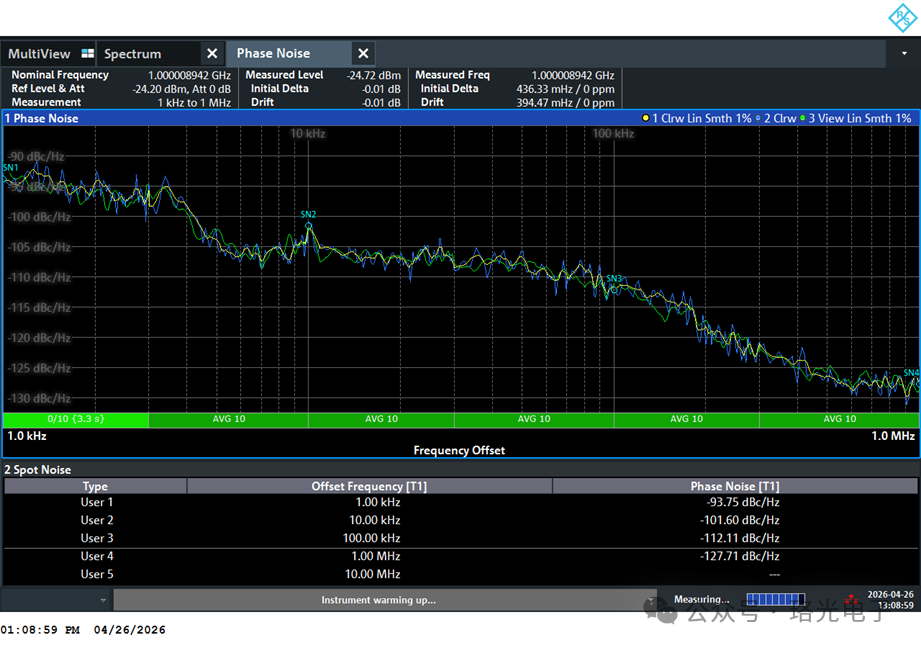
Figure 1: Single-tone Transmission Phase Noise Test Results
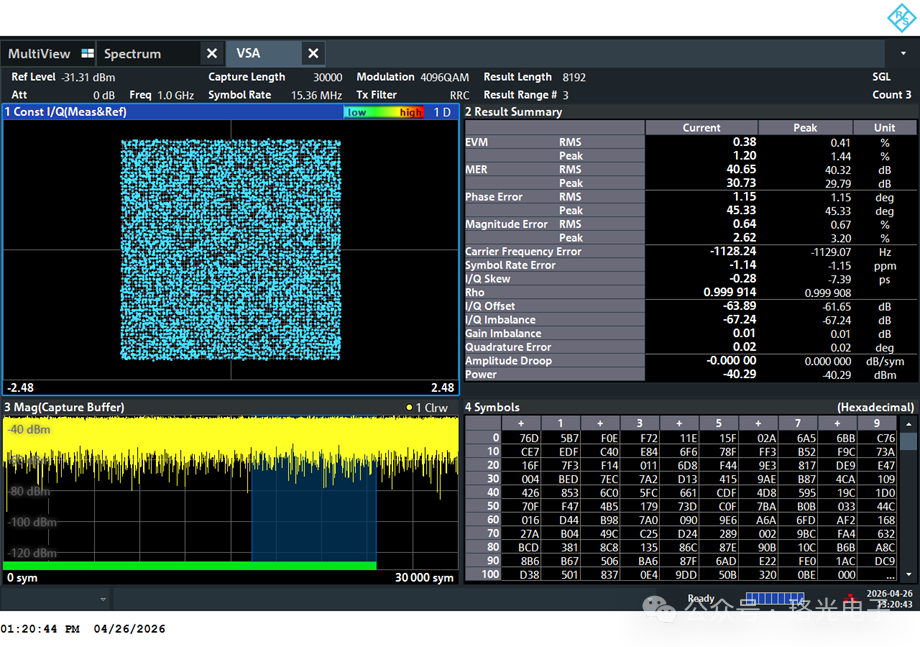
Under QPSK, 1024QAM, and even high-order 4096QAM modulation modes, the system consistently demonstrates excellent EVM performance and clear constellation mapping, fully validating the performance of this driver scheme in modulated waveform generation, transmission link delivery, and overall signal quality.
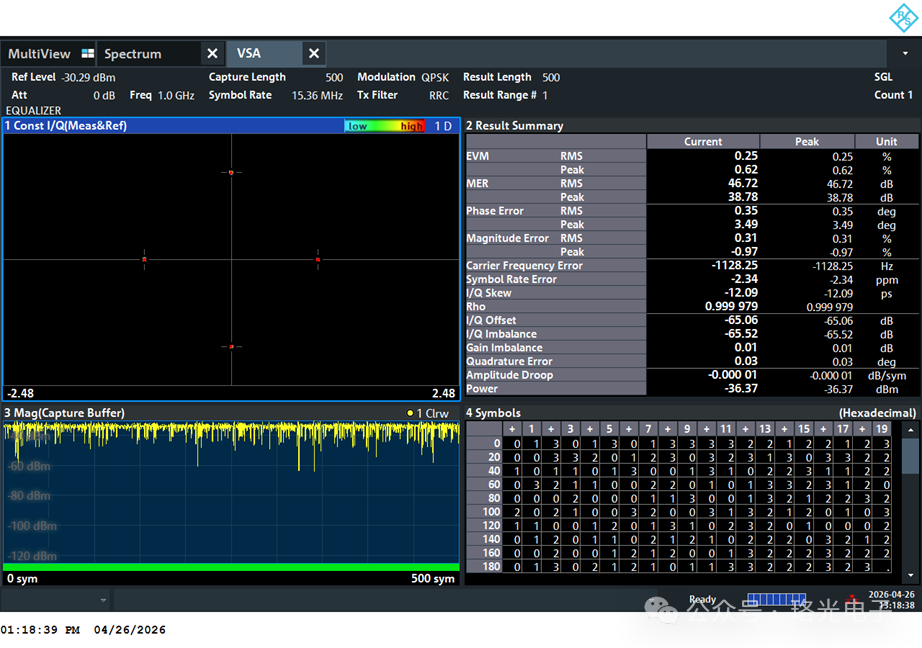
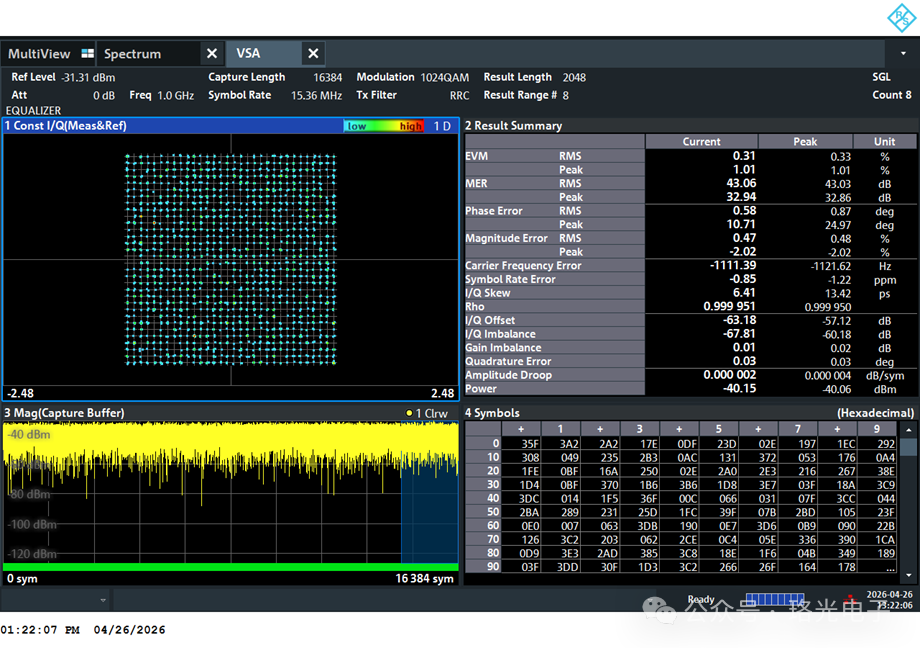
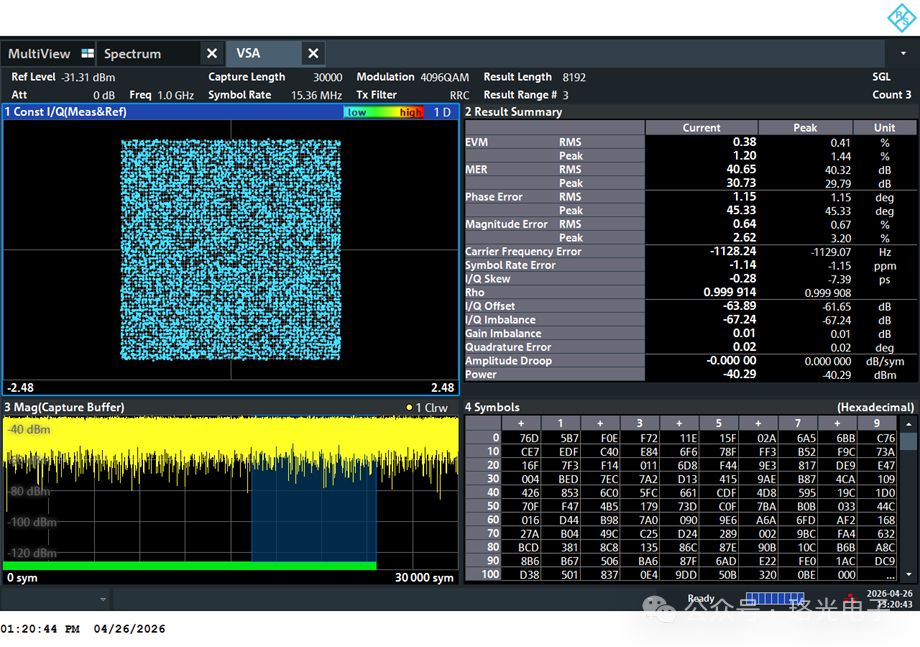
Figure 2: EVM Test Results for QPSK / 1024QAM / 4096QAM Modulated Signals
Receiving Capability: Moving from "Receiving Data" to "Understanding Data"
In receiving validation, data correctness and format transparency are critical.
Luowave Driver V2 provides deep low-level support on the receiving side:
Single-channel / Multi-channel RX acquisition
Raw int16 data reading
Raw data storage
Independent offline source data checking
Luowave Driver V2 empowers the LW39x0 series with enhanced "data transparency." R&D teams can not only see upper-layer results but also trace back to the raw data itself, effectively distinguishing between sampling issues, channel issues, and post-processing issues.
Stability Testing
Based on raw acquisition data and post-processing analysis, continuous observation of the phase stability of the LW39x0 series hardware platform's receiving link can be performed. These results help further evaluate the consistency and stability of the system in scenarios involving continuous acquisition, multi-channel processing, and subsequent analysis.
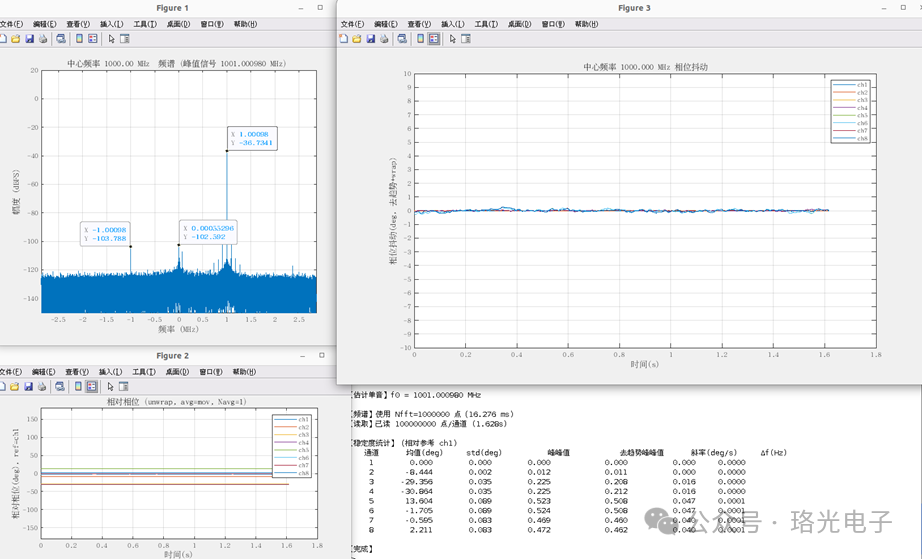
Figure 3: Receiving Phase Stability Test Results
Status Observation: More Efficient Debugging, More Precise Positioning
For scenarios such as high sampling rates and long-duration continuous transmission and reception, the greatest challenge lies in the efficiency of problem positioning. Luowave Driver V2 provides complete status and continuity diagnostic capabilities centered on link observability. When facing issues such as transmission anomalies or spectral jumps, R&D teams can perform synchronous analysis across three dimensions: status, link behavior, and data performance.
Stability Testing
Transmission phase stability tests conducted around continuous transmission scenarios can be used to observe the stable state of the transmission link under long-duration streaming output conditions. Combined with continuity diagnostic capabilities, abnormal changes and potential risks within the link can be identified more efficiently.
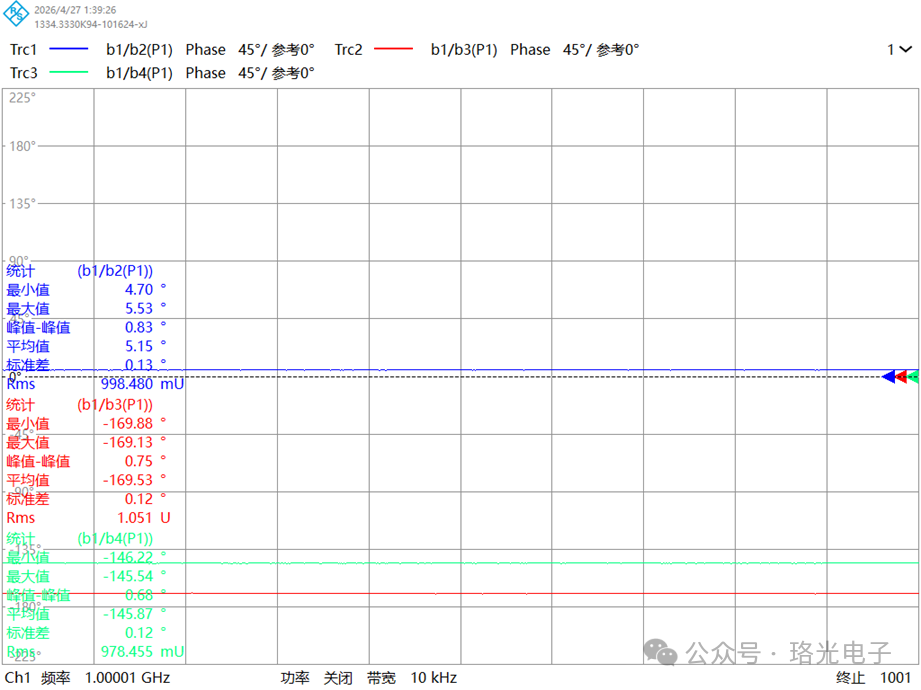
Figure 4: Transmission Phase Stability Test Results
Summary and Outlook: Continuous Evolution of Hardware-Software Integration
The Luowave Driver V2 driver scheme achieves deep coupling between algorithmic analysis capabilities and the actual RF links of the LW39x0 series hardware platform. By bridging high-speed interfaces and underlying hardware, Luowave Electronics is committed to providing research and engineering teams with a more controllable development experience.
[Core Application Scenarios]
Full-Link Joint Debugging and Validation: Supports board-level joint debugging, integrated TX/RX link testing, and loopback testing.
Deep Signal Testing: Covers various signal tests including Single-tone, QPSK, and QAM to meet rapid performance validation needs.
Raw Data Analysis: Supports real-time storage, playback reproduction, and offline analysis of raw IQ data to precisely locate issues.
Efficient Application Exploration: Enables status diagnostics and rapid prototyping within the MATLAB environment, accelerating the implementation of scientific research and engineering projects.
[Technical Services and Customized Development]
In addition to providing standard drivers, Luowave Electronics leverages its full-stack mastery of underlying SDR technology to provide industrial customers with customized technical empowerment from the physical layer to the system level:
Customized FPGA IP core development
Customized system-level solutions
- LW39x0 Series -
The LW39x0 series includes the LW820 (8T8R), LW420 (4T4R), and LW320 (2T2R) for host computer connection; the SDR-LW 3980 integrated with an industrial control chassis; and three rugged laptop versions: SDR-LW 3920 / 3940 / 3980 Note. This series is our core self-developed SDR hardware platform for hardware-software synergy, featuring the following technical characteristics:
Multi-channel Coherent Synchronization: Supports up to 8T8R with phase consistency deviation <1°, suitable for spatial spectrum direction finding and phased array radar.
Wide Frequency Band and High Bandwidth: Covers the 75MHz–6GHz frequency range, with a single channel supporting 200MHz instantaneous bandwidth.
High-Performance Architecture: Based on the Xilinx UltraScale+ ZU11EG FPGA core and equipped with a PCIe Gen3 x8 high-speed communication interface, building a powerful foundation from the RF front-end to high-speed processing.
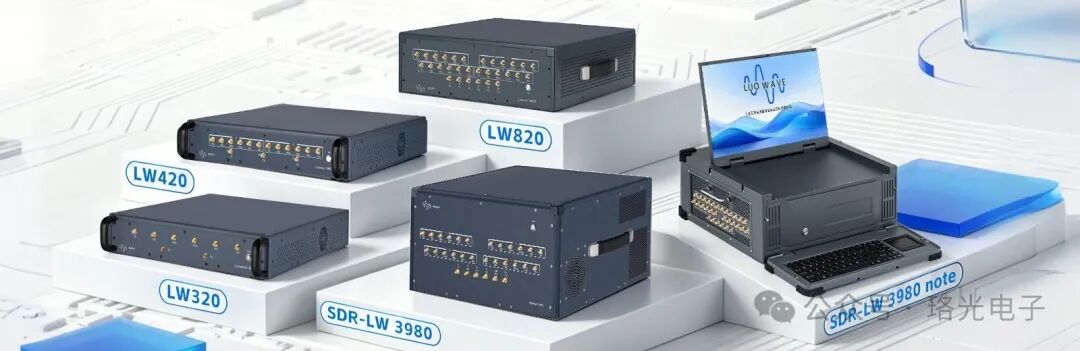
Figure 5: LW39x0 Series Family
The LW39x0 series hardware platform is now open for testing. We welcome you to experience its capabilities in depth using the new version of the driver!